

Edge Computing & 5G: Big Promises

5G: Big Data at a New Speed
It is no longer so difficult to imagine a world in which a smartphone chooses a restaurant for you, calls a doctor, orders clothes, films, music. It is possible that this choice will be much more reliable than the one we are capable of on our own.
All this is possible thanks to innovations in the field of computer memory and data transmission and storage systems – 5G technology, which has made a giant leap in the field of data processing. 5G promises to significantly expand the capabilities of smartphones and turn artificial intelligence (AI) into a ubiquitous human assistant that solves all everyday issues.
Given the ubiquity of smartphones and how persistently they are crowding out all other kinds of devices, 5G is often referred to as a “revolution” in everyday life. Whereas previous generations of connectivity enhanced the capabilities of smartphones, 5G turns them into autonomous devices that make decisions based on AI and IoT technologies.
If 4G provides data transfer rates from 5 to 100 Mbps, then 5G networks can transmit up to 10 Gbps. The Global Mobile Systems Association (GSMA) defines a latency target for 5G as just 1 millisecond, which is 50 times higher than for 4G. In addition, 5G can support several times more connected devices at the same time, which opens up opportunities for the transmission of a huge amount of data and prospects for its use.
And, of course, 5G is an opportunity for businesses where data analytics is essential. User data traffic is growing at an unprecedented rate. However, 5G networks will cope with this traffic. The problem is infrastructure, for example, data centers, the load on which will increase markedly. The solution is edge computing. So, according to the forecast of Oracle, in 2025 there will be 75 billion devices connected to the global network. 75% of the data will be processed at the edge of the network – in remote offices, factories, micro data centers.
In addition, the development of 5G is impossible without the emergence of a huge number of base stations and servers that simultaneously transmit big data. Higher bandwidth requires faster hardware, pointing to the need for investment in memory devices and storage and processing systems, without which the revolution will have to be delayed.
Memory
In 2019, hard drives had up to 20 TB of storage. It is expected that by the beginning of the 2030s we will talk about 40 TB. At the same time, the current density of storage space on hard drives is 1 GB per square inch. 5G hard drives are filled with helium and provide higher energy efficiency with lower cooling requirements. The rapid growth of hard drives has a direct impact on storage volumes in data centers. Besides magnetic tape and optical discs, hard drives are the most cost-effective media.
Flash storage is also expected to increase. It, despite the relatively high cost, attracts more and more applications. The development of NVMe and NVMe-oF provides better access to the functionality of flash memory, making it the main storage of information. Since this media can function in harsh environments, it is preferred to use it in remote edge storage.
At the same time, new energy-independent solutions are emerging. Attempts are being made to commercialize several media that can replace current volatile storage devices such as DRAM and SRAM. These technologies can be applied near memory chips as well as in embedded memory, which can reduce battery and low-power devices and help create more efficient data centers. New technologies in question include magnetic random access memory (MRAM), resistive RAM (RRAM or ReRAM), phase change RAM (PRAM), and ferroelectric RAM (FRAM or FeRAM). Among other things, they facilitate the operation of IoT networked devices, as well as edge or cloud data centers.
The world’s leading technology companies are striving to meet the demands and needs of 5G in terms of storage capacity. For Hitachi Vantara, the development of new platforms and services that meet the needs of business in the era of big data is one of the key priorities. Artificial intelligence and machine learning have long been an integral part of our work, but with 5G these trends will increase many times over.
Storage Systems
Experts say PCIe-based NVMe storage interfaces will be the backbone of future storage systems using flash-based SSDs. This includes network storage capabilities, including remote direct memory access (RDMA) and stations using the NVMe protocol, NVMe-oF.
Reliable storage using server memory channels (DIMMs) will work using flash memory and the latest technologies. Hard drives will become the basis for mass data storage. Tape (or optical disks) will be required for longer storage of cold data, online access to which is not so important.
The data storage market is developing by leaps and bounds. Experts predict that by 2025 the volume of data in the world will grow to 175 zettabytes – they will need to be stored somewhere.The solution to this problem is the division of system functions into network NF (Network Function) and processing (Storage), and such systems can store both structured and unstructured data.
Taken together, this makes it possible to argue that 5G will be a growth driver for digital content over the next decade and will increase the demand for digital storage and storage solutions throughout the network. The demand for lower latency is in turn driving demand for reliable storage in data centers and at the edge.
What is Edge Computing and Why Edge Computing is an Escape from the Cloud?
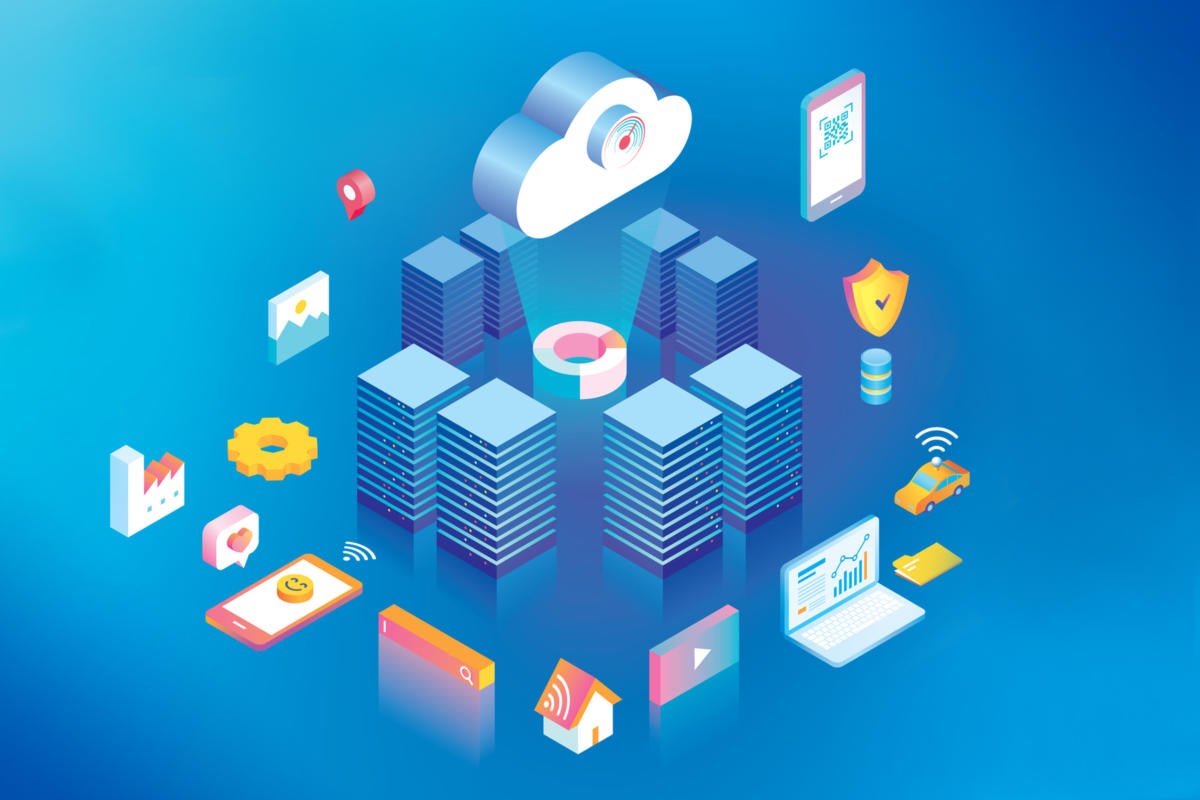
With so many input data transmitted by numerous IoT devices, it is no longer advisable to transfer data to the cloud or a common data center for processing: some mechanisms for analyzing and responding to IoT data can be implemented locally, in the place where this telemetry is taken, and the actual data is produced . That is, the term “Edge Computing” does not mean some kind of physical border, not some abstract type of “cutting edge of technology”, but the fact that all actions take place “somewhere out there, on earth” , and not in the local data center and not in the cloud.
Typical examples of edge computing include:
- Video analysis from surveillance cameras or other sources.
- Autopilot in a car.
- Robot control.
That is, what is long/expensive /pointless to transfer somewhere, loading communication channels at a time when the application is running “in real time”. In addition, in a certain sense, processing data locally saves money by reducing the amount of data transferred and stored in the cloud. The concept of edge computing has emerged from the exponential growth of IoT devices that connect to the internet to either receive information from the cloud or deliver data back to the cloud. And many IoT devices generate huge amounts of data in the course of their operation, which are inherently unnecessary after they have been processed.
Think of devices that monitor production equipment in a factory, or an internet-connected camcorder that sends live video from a remote office. While a single device producing data can transfer it over a network quite easily, as the number of such devices grows, latency problems already arise. Instead of one camcorder transmitting live footage, multiply it by hundreds or thousands of devices. Not only will quality suffer due to latency, but bandwidth costs can be huge.
Edge computing hardware and services help solve this problem by providing a local source of processing and storage for many of these systems. An edge gateway, for example, can process data from an edge device and then send only the data it needs back through the cloud, reducing the need for bandwidth. Or it can send data back to the edge device for the needs of the real-time application.
In general, there is nothing new here: in terms of hardware, equipment for Edge Computing is more like old-school hardware, created before the era of virtualization and the transition to the clouds. Edge devices can include a smartphone, a laptop, IoT sensors, a desktop server, and a microwave oven. Naturally, if you have an edge laptop, then you must also have an edge network gateway, through which the object’s local network is connected to the cloud and a centralized data center. As you might guess, this is a regular network gateway, most likely with an integrated controller for managing Wi-Fi access points.
How is Edge Hardware Different?
“You have coolers and air conditioners in your office, but we may not even have a toilet at the facility,” – this is the principle that should be followed when approaching Edge Computing. Where you process data, there may not only be no data center, but there may not even be a place to install a server cabinet. There may not be a server either, its role can be played by a laptop, workstation or smartphone. That is, if you remember the first offices in which the 1C server was installed right in the accounting department in the middle of the office to make it easier to pull wires, you can say that these people foresaw Edge Computing long before it became mainstream.
That is, Edge equipment is distinguished by:
- Use of simple interfaces (RJ45 for twisted pair + WiFi).
- Compactness that allows you to place the device even on a stool, even on the desktop.
- Low noise level to work near staff.
- Low power consumption because a generator or a solar panel can be a constant source of electricity.
Why Edge Computing Is the New Trend
For many companies, the use of the cloud is impractical due to the high cost of data channels. Increasingly, the biggest benefit of Edge Computing is the ability to process and store data faster than in the cloud, allowing you to build more efficient real-time applications.
Once upon a time, a smartphone scanning a person’s face would have to run a facial recognition algorithm through a cloud service, which would take a long time. With the edge computing model, the algorithm can run locally on the edge server or gateway, or even on the smartphone itself, given the growing power of smartphones. Applications such as virtual and augmented reality, self-driving cars, smart cities, and even building automation systems require fast processing and response.
Edge computing has evolved significantly since the days of isolated ROBO [Remote Office Branch Office] IT centers. With improved connectivity to improve edge access to more core applications, and new IoT and industry business use cases, edge infrastructure is poised to become one of the main drivers of growth in the server and storage market over the next decade and beyond.
Companies like NVIDIA have recognized the need for more processing on the ground, so we’re seeing new system modules that incorporate AI features. Jetson’s latest Xavier NX module, for example, is smaller than a credit card and can be built into smaller devices such as drones, robots and medical devices. Artificial intelligence algorithms require a lot of computing power, so most of them work through cloud services.
Privacy & Security
However, as with many new technologies, solving one problem can lead to others. As the number of IoT devices grows, it is critical to understand the potential security issues around these devices and to ensure that these systems can be secured. This includes making sure the data is encrypted and that the correct access control methods and even VPN tunneling are being used.
What About 5G?
Around the world, operators are deploying 5G wireless technologies that promise the benefits of high throughput and low latency for applications. Instead of just offering faster speeds and telling companies to continue processing data in the cloud, many carriers are developing edge computing strategies in their 5G deployments to enable faster real-time data processing at sites, which is especially important for mobile devices, cars and robots.
Clearly, while the original goal of edge computing was to reduce bandwidth costs for IoT devices over long distances, the growth of real-time applications requiring local data processing and storage will drive technology development in the coming years.
Boosty Labs will soon begin providing development services for Edge Compiting + 5G.