

Tokenization of Real World Assets on Blockchain as a Way to Solve the Global Problem of Inequality


Over the past two decades, the problem of financial exclusion (that is, complicated access to finance) in the world has received significant impetus towards its solution, and the main drivers of this have been the informatization of financial services (for example, mobile banking) and the expansion of service infrastructure (for example, POS terminals). , better internet connectivity, digital personal verification, etc.) among both poor and rich countries. Nevertheless, it is worth recognizing that the problems of access to bank loans (in conditions of low financial literacy and financial discipline of the majority of the population) and access to traditional investment goods (securities, land, real estate, gold) have different solution trajectories.
Relatively speaking, the opening of a new ATM in a provincial village will probably not affect the investment activity of the inhabitants of this village to buy investment assets, which investors buy, as a rule, in anticipation of their increase in value over time. And this means that the oldest and global problem of wealth inequality, which in the conditions of industrial and post-industrial economies has significantly increased due to low financial availability to buy investment assets and exchange speculation with them, today is one of the key problems for humanity and requires the latest digital decisions in accordance with the state of technology capabilities, with the readiness of political and financial elites, with the state of the global financial system. Despite significant (as publicly announced) efforts by politicians and bankers from supranational organizations, the problem of global financial inequality is far from being solved, and income inequality continues to grow against the backdrop of rapid development of digital technologies. Income inequality has risen in virtually every major advanced economy since the 1980s, the rising digital boom: it has risen particularly sharply at the top of the income distribution.
The related problem of wealth inequality is no less acute than income inequality. The rise in inequality is particularly noticeable in the United States. Between 1995 and 2015, existing income inequality in the United States (as measured by the Gini index) increased by more than 10%. The income share of the top 1% has more than doubled since the early 1980s to 22% through 2016, while that of the top 1% has risen to around 40%. Those who had incomes as the working middle class were disadvantaged, and the average worker often saw real wages stagnate over long periods.
Only 1.2% (62.5 million people) of the population own 47.8% of the world’s wealth, 11.8% of the population own 38.1% of the world’s wealth, 33.8% of the population own 13% of the world’s wealth, and most of the 53.2% of the population owns only 1.1% of the world’s wealth. These striking statistics on the distribution of wealth, perhaps, leave no hope for known or existing tools to correct this twisted situation.And together, all this is another concentrated manifestation and explanation of the global problem of financial inequality.
There is great difficulty in solving it in traditional or established ways, which is associated with a significant redistribution of property among the elites and significant conflicts. New solutions are needed that will make it possible to make asset markets, in particular investment markets, much more massive. And that means making a contribution to a significant increase in the number of the middle class in the world, and especially people who can and want to invest, and not just spend money.

Asset Tokenization As a Means of Solution
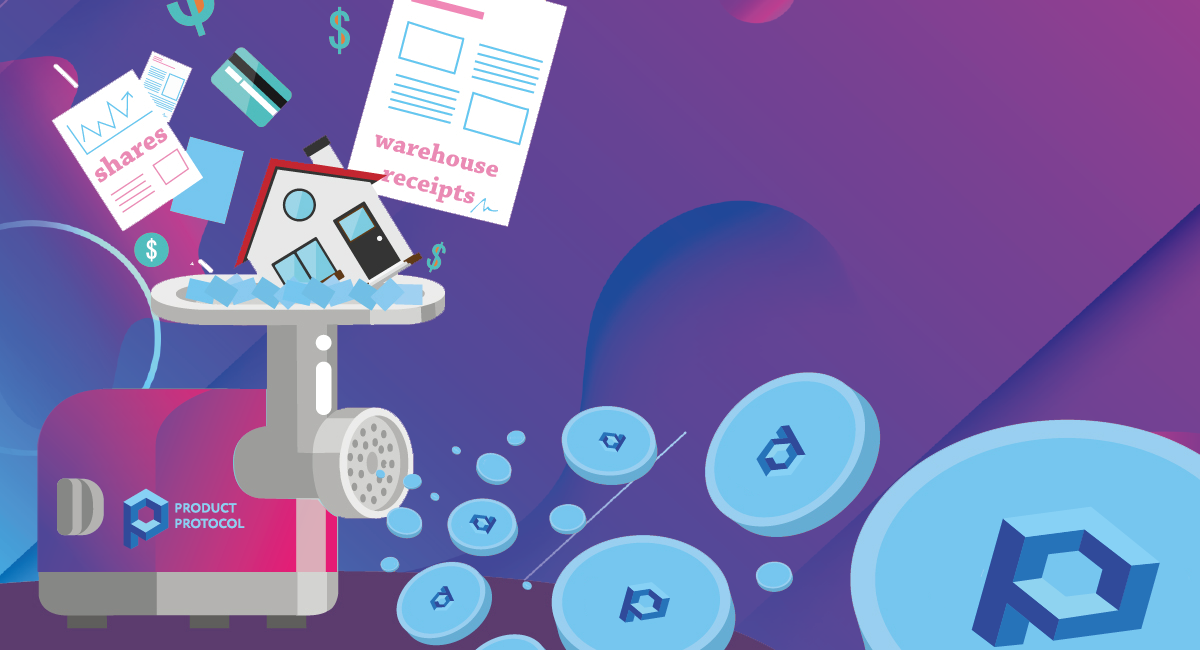
Perhaps one of the latest and most encouraging solutions to global financial inequality is asset tokenization. Technologically, asset tokenization is based on blockchain technology, and this is primarily a technology for storing and recording accounting objects (property), and blockchain tokens are accounting tools. That is, if we draw an analogy with accounting, then the token in this case is an inventory number and is assigned to a specific type of property, which is accounted for using blockchain technology. Cryptocurrencies or cryptoassets are in no way associated with real property, although they are also tokens by their nature. Realizing this, or at least feeling it, the largest banks and funds (for example, HSBS, Credit Suisse, Bank of New York Mellon, IFC, etc.) are paying attention to tokenization based on distributed ledger technology (in particular, blockchain technology), since the latest digital solutions based on this technology contain the potential to preserve and capitalize assets. As a consequence, they contain the potential to reduce global inequality in the distribution of wealth and even radically lower the threshold for entry into investment asset markets.
To date, there are very encouraging expectations in the Western world regarding this phenomenon. Thus, according to analysts from the American consulting company Bain, the potential of digital assets in private markets is much greater than in public securities and raw materials markets, and amounts to $258 trillion for the global debt market and $317 trillion for the global real estate market. According to a survey of global institutional clients in 2022, 97% of institutional investors (pension funds, sovereign wealth funds, institutional wealth management firms, hedge funds, etc.) agree that “tokenization will revolutionize asset management” and will be “beneficial to the industry”, and 91% of institutional investors expressed interest in investing in tokenized products.
Tokenization gives an opportunity to provide investment options to underbanked populations and support the UN’s global Sustainable Development Goal to reduce inequalities. However, in order for tokenization to provide access to these populations, several factors should be taken into account: the necessary infrastructure, secure access to the Internet, customer credit profile, financial and digital literacy of the population. Despite these challenges, the increase in smartphone usage and digital banking in Southeast Asia, for example, suggests that this segment of the population may be on the path to greater financial inclusion. Some Asian countries (Thailand, Philippines and India) are already implementing digital identities and centralized Know Your Customer (KYC) repositories to provide reliable sources for customers’ credit profile.
The potential of blockchain technology to significantly change the financial services sector is becoming increasingly clear. This global industry now spends approximately $1.7 billion annually on new blockchain solutions.Back in 2015, the World Economic Forum (Geneva-Davos) predicted [48] that by 2027 all blockchain solutions for finance will cover up to 10% of global GDP. By 2027, tokenized asset markets have the potential to reach $24 trillion, and for this potential to be fully realized, collaboration between financial market participants and private infrastructure providers is needed.
It is clear that investment has traditionally been limited to mass wealth due to high transaction costs (high threshold of entry) and low financial literacy of a large part of the world’s population. In fact, over 84% of the world’s population would have to save more than two years to afford a stake in each of the five largest market capitalization companies. However, the fractionalization (or divisibility or breakdown into any small fractional parts) of an asset that blockchain technology allows can make investments much more accessible to the majority of the world’s population. And if the law allows it, then potentially anyone can acquire any small share of the shares of such large companies as Tesla, Apple or Alphabet, access to which is now very complicated, despite the publicity of these companies.
With the help of distributed registry technologies, any real assets (intellectual rights, real estate, securities, gold, etc.) can be represented and traded as programmable distributed registry tokens using smart contracts in a distributed registry environment. It is worth emphasizing two important features of a distributed registry token in the organizational sense:
1) Since a distributed registry token has accounting units in the distributed registry token accounting system, the user of such an accounting system, taking into account his goals, at the time of creating a distributed registry token can independently indicate the number of accounting units of such a distributed ledger token that are issued. For its part, a distributed registry token as an accounting object can be an independent object of property relations, which has its own accounting units in the distributed registry token accounting system.
2) Each token can be easily programmed in such a way as to represent the legal ownership of the underlying asset, and can be divided into any small (fractional) number of parts, which allows fractional ownership. No other known tool or mechanism allows you to do this.
Thus, it provides significantly greater access to the securities market by rapidly reducing the minimum investment amount (low entry threshold) and providing investment opportunities to a wider range of investors.What could this practically mean for tackling the global problem of financial inequality? This will mean, for example, that in low-income countries, an ordinary person, making monthly savings of $10-20 or $100-200, can actually become an investor in investment assets, since such a person will be able to independently overcome the threshold of entry into these markets, carrying out their investments without a hired broker, who usually takes a significant commission for their services.
This, together with the growing popularity of investment programs and the growth of the middle class, indicates that microinvestment is indeed a viable option for those with lower available incomes.
For example, before the end of 2018, China’s Alipay’s 588 million users had already invested their small sums of money in the Tianhong Yu’e Bao corporate mutual fund, and in mid-2019, its assets under management had already reached $150 billion. Tokenization also allows partial ownership of low-liquid assets (real estate, precious metals and stones) or alternative assets (antiques and art), which usually require large investments at once and are therefore of interest to a limited circle of knowledgeable investors. This not only expands the range of asset choices for investors, but also increases affordability, allowing for portfolio diversification and stimulating mass financial literacy even in poor countries.
And vice versa: tokenization will create more market liquidity for sellers of said assets. And this already means that the existing property will become more valuable for its owner and may even stimulate its frugality, and as a result, the global conservation of natural resources. Overall, tokenization has the potential to:
a) reimagine both investor geography and investor demographics;
b) increase accessibility and expand the universe of available investment opportunities.
However, for the introduction of tokenization, some traditional principles for the modern financial market are of exceptional importance:
1. Financial and legal compliance (or integrity compliance). It will be critical for most transactions using tokenized assets and especially in investment asset markets. Like traditional transactions, they must comply with the same Know Your Customer (KYC) and anti-money laundering (AML) standards. However, the speed, efficiency and irreversibility of transactions in a distributed ledger means that the current manual controls and verifications need to be replaced by automated compliance checks, which is technically possible only in the environment of decentralized information platforms.
Some companies have already developed specialized utilities for managing compliance checks and accounting for tokenized assets, for example, American Avimetal (www.avimetal.com) and Harbor (https://harbor.com). Their information platforms make it possible (still to varying degrees) to ensure that transactions concluded in relation to assets comply with KYC and AML principles and applicable legislation, in particular on securities. Another example is the Rate3 network, which is a protocol for the description and tokenization of assets and identification in the Ethereum and Stellar blockchains.
2. In order for tokenization to spread, international and state regulation is very important. Throughout 2020-2022, the international understanding of the essence of tokenized assets seems to have moved off the ground: big regulators (for example, the IMF in 2022-2023) are increasingly distinguishing between tokenized assets and, for example, 26 cryptoassets.
Many central banks (for example, China, Singapore, Switzerland, Ukraine, Hong Kong) have already made significant progress in implementing tokenized currencies, in particular central bank digital currency (CBDC), for payments, settlements and cross-border trade.For example, China’s central bank introduced a pilot version of its digital currency in four Chinese cities back in 2021, but even at the beginning of 2023 this experience did not spread to the whole country, as there are not enough willing users. Similarly, in Ukraine: despite rather successful experiments with the digital hryvnia, since 2017, the e-hryvnia has not been introduced due to the lack of market demand from its potential corporate consumers, who see its implementation as extra financial costs for preparation.
3. Services of a custodian of tokenized securities (custodial services), which are critical to providing issuers and investors with confidence that their assets are stored and managed securely. However, the role of the custodian of tokenized assets is different from the role of the custodian of traditional assets such as securities. Ownership of tokenized assets is confirmed using a cryptographically private “key” that prevents theft and unauthorized use of it.
The role of the custodian is to securely store and manage these keys. The general world approach is as follows: if not one, then literally 2-3 qualified custodians, in principle, can be licensed to store tokens on behalf of institutional investors, but so far in different jurisdictions of the world there are not enough standardized licensing requirements for storing digital assets. However, back in 2020-2021, some companies (for example, Coinbase, Gemini, BitGo) managed to get regulatory approval as qualified custodians in the US.In addition, major institutional players in asset management and services have begun offering their own solutions for holding collateralized tokenised assets.
In particular, the large Asian financial corporation HSBC launched 27 Digital Vault, a blockchain platform for storing digitized private transaction records. As early as 2021, the platform could cover $20 billion in private placement assets, including equity, debt and real estate, allowing its international clients to securely access their records in real time.
Also, the American company Fidelity launched the Fidelity Digital Asset Services platform (https://www.fidelitydigitalassets.com/) in Europe in 2020 to store and trade secured virtual assets. The continued growth and development of digital asset storage solutions, as well as the standardization of licensing requirements, are critical to spurring the growth of the tokenized asset ecosystem and, as a result, approaching the right solution to the global problem of financial inequality for millions of private investors and micro-businesses, even in the poorest countries of the world.
Conclusions
The oldest and global problem of inequality in the level of well-being, which in the conditions of the industrial and post-industrial economy has significantly increased due to the low financial availability to buy investment assets and exchange speculation with them, today is one of the key ones for humanity. Due to the great complexity of its solution by traditional or well-known methods, associated with a significant redistribution of property among the elites and significant conflicts, it is not actively declared in the world, and globally its place was taken by “green” and energy problems.
Asset tokenization is seen as a new way and mechanism that can significantly reduce the investment barrier for billions of people around the world by lowering the minimum investment cost threshold and increasing the liquidity of existing tangible assets. Blockchain technology can also provide investors with access to assets that traditionally require significant capital investments (real estate, precious metals, private securities, works of art), expanding the range of investment options available for buying and selling.
To make this possible, the issue of compliance and regulation needs to be addressed. Fortunately, many countries and organizations have already taken steps to better understand asset tokenization and its value, as well as the potential of tokenization for asset ownership relationships, allowing people of all income levels to increase their wealth and financial literacy. This also leads to a reconfiguration of the institutions and rules for the operation of the market infrastructure, where the states and private providers of such services will be ready to jointly establish the accounting of tokenized assets, thereby already at the level of institutions fixing a very low threshold for entering the markets of investment assets in the world.