

Digital Technologies in Fashion Supply Chain Management

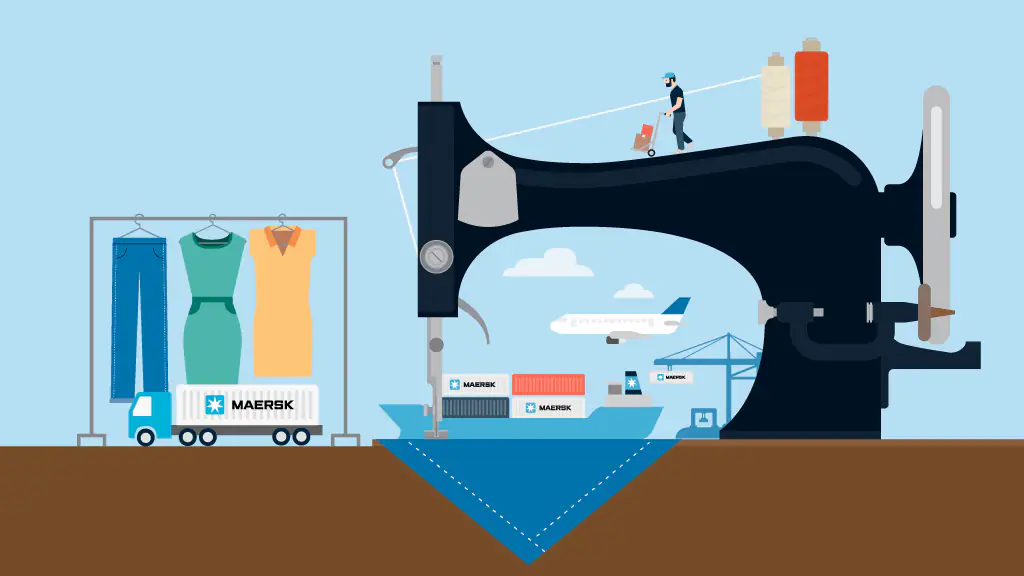
In modern conditions, the organization of logistics processes in companies in various industries needs constant improvement. This is obvious, as logistics costs can be significant. For example, in the United States, logistics costs account for 10–15% of the cost of industrial products, and their share in the structure of gross domestic product reaches 8%. Reducing logistics costs, increasing the efficiency and flexibility of supply chains to a large extent affects the efficiency of various companies. Therefore, the logistics sector today is becoming a powerful driver for the development and increasing the competitiveness of companies.
There are various methods to improve the efficiency of supply chains, but one of the most promising today are methods that involve the use of digital technologies.
The modern world is on the verge of a new digital era, other researchers believed that this era has already arrived. Analysts agree that in the near future, such digital innovative technologies as blockchain, Internet of things, artificial intelligence, high-speed networks and others will be increasingly used in logistics.
Therefore, the processes of digital transformation have long become one of the topical research topics in various fields of knowledge. At the same time, there are very few studies on the optimization of supply chains and logistics systems using digital technologies.
The vector of digitalization is the strongest driver of market development in various sectors of the economy, the same trend can be traced in the fashion industry. The fashion industry is a dynamic industry where timing, accuracy and flexibility in responding to customer needs are key success factors. The supply chains in this industry are long and complex. This is due to the fact that the production of clothing, footwear and accessories is often shifted to low cost countries such as Southeast Asian countries (primarily China) and the main sales markets are mainly in Europe and the USA.
For a long time, the fashion industry did not pay due attention to digital technologies, but nevertheless, today, large companies in this industry are increasingly adopting them.
Clothing brand owners understand that companies need an innovative way of development, which is unthinkable without the use of modern technologies. Only their active implementation can allow companies to be competitive, to survive in difficult modern conditions, because even buyers themselves are increasingly using digital technologies.
In order to understand what modern technologies are promising to use in the fashion industry, first of all, it is necessary to remember that all innovations are ultimately aimed at meeting the needs of the buyer, and the main buyers of fashion industry goods are people in the age range of 15-45 years are those who actively use digital technologies in their lives.
A large number of companies operating in the fashion industry, the availability and variety of products on offer lead to the fact that consumer requirements are constantly increasing.
Consumers want to receive goods made in accordance with the latest fashion trends, in the right size, color, in the right quantity and just in time; while consumers often want to receive the necessary information and make a purchase online. It is important to bear in mind that today fashion consumers will be interested in purchasing a particular product, and after a short period of time, interest in the same product will fade as fashion trends change.
It should also be noted that the demand for goods in the fashion industry has a pronounced seasonal nature, and consumers are interested in buying a particular product only in a certain period of time (for example, people buy goods of the spring-summer season in summer, autumn-winter in winter).
Variability, pronounced seasonality, the difficulty of formalizing consumer requirements, a short life cycle of products impose additional requirements on supply chain management and logistics in this industry.
One of the challenges faced by logistics managers in the industry is to reduce the overall order fulfillment cycle (the time interval from the moment an order is placed to the moment the goods arrive at the stores). This requirement is driven primarily by the need to offer products to the market that exactly meet customer needs, which is only possible if the new product launch plan is based on accurate sales forecasts.
The problem is that it is extremely difficult to prepare an accurate sales forecast six months or even a year before the actual sale date (which is usually the case in fashion companies) is extremely difficult. This is due to the high range of goods, the high volatility of the market situation in the industry, the difficulty of formalizing customer requirements, short product life cycles, and other features typical of the fashion industry. Therefore, in order to make sales forecasts more accurate, many companies in the fashion industry try to make them as close as possible in time to the actual fact of sales.
It turns out that the later in relation to the actual fact of sales a sales forecast is made, the more accurate this forecast will be, since it can take into account newly emerged (for example, new fashion trends) or previously unknown factors affecting customer demand. If the preparation of a sales forecast in time is close to the fact of the sale, then another difficulty arises – to produce the goods necessary for consumers as quickly as possible and deliver them to buyers.
Thus, one of the main tasks of logistics and supply chain management in the industry is to reduce the order fulfillment cycle.
The main losses of fashion industry companies associated with a long order fulfillment cycle, and, as a result, inaccurate response to customer needs, occur as a result of:
– overstocking and sale of goods at big discounts or their disposal at the end of the season;
– lost sales that occur when the product of the required model, color and size is not available in the store and the buyer cannot purchase it.
The use of digital technologies can help overcome these losses by optimizing the logistics (material and information) flows of companies.
Modern technologies make it possible to shorten the order fulfillment cycle, and thus respond more accurately and flexibly to the needs of customers.
Digital technologies can be applied at various stages of the logistics process, and based on this principle, they can be classified as follows:
– digital technologies used in the production process;
– digital technologies related to the delivery of goods from the manufacturer to the final buyer (transportation, warehousing and other operations);
– communication and information technologies that form information flows that connect the consumer, the manufacturer of products, and other participants in the supply chain.
When used together, these technologies can effectively reduce the overall order fulfillment cycle and respond most accurately, flexibly and correctly to the needs of the buyer, minimize logistics risks and optimize the company’s logistics costs.

Let’s look at some of the digital technologies used in the fashion industry and their impact on supply chain management in the industry. A special place and attention should be paid to those digital technologies that are used in the production of goods for the fashion industry. Among these technologies are the following.
1. Laser cutting. With the help of lasers, you can quickly cut products and make the necessary cuts or perforations in various fabrics or other materials. With laser cutting, cutting of fabrics is carried out with high precision, which reduces material consumption and further allows for quick assembly of the product. This technology allows to increase the productivity of the production process by 4 times compared to traditional operations.
2. 3D printing. Already, this technology is being used by fashion industry companies for the production of various goods. It is likely that in the near future, 3D printing equipment will become more affordable and will be used by customers at home. In this case, each consumer will be able to create his own clothes at
using a 3D printer by purchasing an electronic version of the model from manufacturers and substituting their dimensional parameters. 3D printers allow you to produce products with higher productivity than traditional technologies. It is also important to consider that this technology allows you to move the production of goods as close as possible to the sales market, which reduces the time spent on cargo transportation.
3. Smart tailoring. When using the technology, it is enough to connect a computer with the necessary program to the weaving machine, enter the information necessary for the production of the product, including the characteristics of the clothing model, color, pattern and other parameters, and the machine will create the necessary pattern and produce the desired model. Smart tailoring technology can reduce material and energy costs by 70 to 80% and effectively reduce the time of the production process.
Also, digital technologies are being actively introduced in the fashion industry, simplifying the implementation of logistics operations (transportation, warehousing, etc.) and increasing their safety and reliability.
In order for goods in the fashion industry to reach stores as quickly as possible, supply chain management in the industry must pay special attention to the time factor, increasing the reliability and safety of warehouse operations. Today, various digital technologies can also be used to achieve this goal.
In the fashion industry, order picking for wholesale customers in distribution warehouses must be done as quickly and as accurately as possible. A common problem that occurs when picking orders for wholesale customers in the fashion industry is poor order picking accuracy, which causes shortages, regrading and other problems. Studies have shown that companies incur losses due to misorder picking errors of approximately $100 for each incorrect order; companies also lose time correcting errors and bear reputational risks.
To overcome this problem, companies are increasingly using sorting modules or sorters. A sorter is equipment whose main task is the automatic sorting of goods and their distribution according to orders or customers. With the help of such equipment, order picking can be completed as quickly as possible and, which is very important, with a minimum number of errors. Screening capacity module – 7,200-30,000 lines of orders, the accuracy of the selection of trade units – up to 99%. Also, the use of sorting modules allows you to implement the logistics procedure of cross-docking, which reduces the order fulfillment cycle. When introducing cross-docking, fashion industry companies do not need to re-accept goods (it is done during the sorting of goods) and place them in storage, which allows them to deliver goods to retail outlets as quickly as possible.
The introduction of virtual fitting rooms also allows fashion industry companies to reduce the time required to prepare the release of new collections and optimize the logistics costs associated with sending samples of new clothing models and preparing new collections (business trips, etc.).
Usually, in fashion industry companies, the process of preparing new collections of clothes and shoes consists of several stages. Initially, based on the technical requirements, the company that owns the brand produces clothing samples, the quality of which must be assessed by the company’s designers. It is necessary to coordinate not only the model itself, but also the fabric, colors, patterns, the quality of individual elements, seams and other parameters of all products of the collection (sometimes – several hundred products). Based on the results of the coordination, designers make their own adjustments to the parameters of new models of clothing and footwear, and such adjustments can be made more than once.
Typically, product prototypes or samples are sent from the factory to designers and developers by mail, which takes considerable time and delays the release of a new collection. Many companies in the fashion industry can already optimize this process by using virtual fitting rooms today. In this case, all the necessary fittings on models and coordination with designers take place online and take much less time. The use of “virtual fitting room” technology helps to speed up the launch of a new collection, reduce the time to bring new products to the market. Thus, the functionality of online fitting rooms allows you to qualitatively rebuild the process of creating clothing collections.
Smart Electronic Mirror technology is designed for shoppers who prefer to shop in physical stores rather than online. A smart electronic mirror allows you to change the model, its color, change the elements of clothing in order to view it from different angles.
Innovations in the field of information digital technologies used in the fashion industry are not limited to this: for example, there are digital technologies that allow you to quickly obtain information about the stock of clothing in various stores; create profiles of individual buyers, on the basis of which a personalized selection of clothes is carried out.
However, according to many researchers, there is a lack of such communication technologies. This is primarily due to the fact that in the fashion industry market there are various participants in the supply chain that form the fashion industry: manufacturers of fabrics, clothing, retailers, designers, buyers, logistics operators. However, communication links, information exchange and responsiveness between these participants are very complex, non-transparent, and often not effective enough.
At present, the fashion industry is underutilizing effective information and communication digital technologies that could effectively exchange information between the various participants in the fashion supply chain. This function could be performed by digital platforms. Thus, manufacturing companies on the basis of a common electronic platform could track the balance of goods in the retail sector. In the future, based on the information received, they could more accurately plan production, purchases and deliveries. On the basis of a common electronic platform, effective channels of interaction with buyers can be created in order to better understand and respond to their requirements.
The use of modern technologies opens up new horizons for the fashion industry. It is safe to say that the future of the world of the fashion industry lies in digital technologies. At the same time, in the digital age, the logistics sector is becoming a powerful driver for the development and competitiveness of companies in the industry.
Boosty Labs will soon begin providing solutions development services for the Fashion Supply Chain Management.